
A simple piece of good day clipart can do more work than a paragraph of text. Dropped into an internal email, a social media post, or a customer confirmation, it instantly shifts the tone from transactional to thoughtful. This isn’t just about decoration; it’s about leveraging small, cheerful designs to build connection and inject a dose of positivity into digital spaces that are often cold and impersonal.
But not all cheerful clipart is created equal. The difference between an image that feels genuine and one that seems generic often comes down to understanding the subtle language of its design—from color choices to character expressions.
At a Glance: Key Takeaways
- Deconstruct the Vibe: Learn the core design elements that make this clipart effective, including warm color palettes, universal symbols of happiness (suns, flowers, hearts), and expressive typography.
- Match Style to a T: Discover how to choose the right aesthetic for your audience, whether it’s playful cartoons for an internal memo or elegant, hand-drawn florals for a client thank-you.
- Master the Technicals: Understand the crucial difference between vector (SVG) and raster (PNG) formats and when to use each for crisp, professional results.
- Avoid Common Pitfalls: Get a simple framework for matching the clipart’s mood to your message’s intent, ensuring your visuals enhance—not undermine—your communication.
The Anatomy of Cheerfulness: What Makes Good Day Clipart Work?
Effective “good day” clipart isn’t just a random collection of happy images. It’s built on a foundation of visual cues that our brains are hardwired to associate with positivity and well-being. By understanding these components, you can select images with greater intention.
The Color Palette of Positivity
Color is the first and most immediate signal. While styles vary, the most effective good day clipart typically leans on a palette that evokes warmth, energy, and calm.
- Warm Yellows and Oranges: Directly associated with the sun, light, and energy. These colors are optimistic and attention-grabbing, perfect for a “start your day” message.
- Bright Sky Blues: Evoke feelings of calm, stability, and open possibilities, like a clear, cloudless sky.
- Lush Greens: Connected to nature, growth, and harmony. A four-leaf clover or a simple green leaf can convey luck and well-wishes.
- Soft Pinks and Reds: The universal colors of affection and care. A simple heart or a rosy-cheeked character communicates warmth and kindness.
Iconic Symbols of a Good Day
Beyond color, these designs rely on a shared visual vocabulary of happiness. These symbols are shortcuts to a positive emotional response because they require almost no interpretation.
- Nature’s Best: The most common theme revolves around a pleasant natural world. Think smiling suns, fluffy white clouds, vibrant rainbows, and blooming flowers. These elements suggest a world that is bright, peaceful, and full of life.
- Friendly Faces: Characters—whether human, animal, or anthropomorphic objects like a coffee cup with a face—create an immediate sense of connection. A simple smile is a powerful, cross-cultural symbol of friendliness and goodwill.
- Heartfelt Gestures: Icons like hearts, hands making a heart shape, or two figures hugging are direct representations of love, care, and positive regard. These are especially effective for messages meant to be supportive or appreciative.
Typography That Speaks Volumes
When text like “Have a Great Day!” is part of the clipart, the font choice is as important as the words themselves.
- Bubbly, Rounded Fonts: Feel casual, friendly, and approachable. They work well for informal communications and social media.
- Handwritten Scripts: Add a personal, authentic touch. A loose, brush-stroke script feels warm and genuine, while a more refined cursive can feel elegant and special.
- Clean, Sans-Serif Fonts: Paired with minimalist illustrations, these fonts create a modern, cheerful look that feels professional yet friendly.
Choosing Your Style: A Guide to Matching Clipart to Context
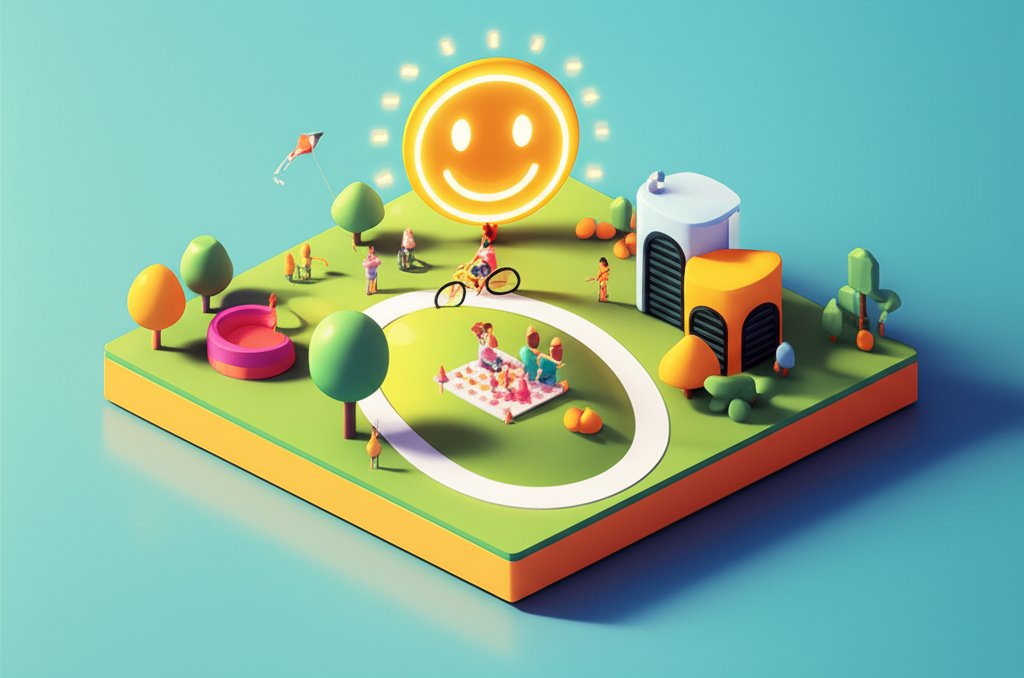
The effectiveness of good day clipart hinges on context. A quirky cartoon that delights your internal team might feel out of place in a formal client proposal. Understanding the different aesthetic styles helps you make the right choice every time. For a high-level look at the variety available, you can Explore Good Day Clip Art and see these categories in action.
Playful & Whimsical
This style is characterized by bright colors, cartoon characters, and exaggerated features. It’s perfect for breaking the ice and fostering a fun, lighthearted atmosphere.
- Best For: Internal team communications, social media posts for a general audience, newsletters for creative brands, or classroom materials.
- Case Snippet: A project manager starts a Monday morning Slack thread with a piece of clipart showing a smiling, caffeinated coffee bean. It’s a small gesture that sets a positive, energetic tone for the week.
Modern & Minimalist
This aesthetic uses clean lines, simple shapes, and a more restrained color palette. It conveys cheerfulness in a sophisticated, uncluttered way. Think simple line art of a sun or a single, stylized flower.
- Best For: Professional-yet-friendly contexts like email signatures, appointment reminders for service businesses, or subtle accents on a corporate wellness blog.
- Case Snippet: A therapist’s automated email reminder includes a simple, black-and-white line drawing of a peaceful-looking plant with the text “Wishing you a calm day ahead.” It aligns with the practice’s brand while adding a touch of warmth.
Elegant & Hand-Drawn
Featuring watercolor textures, delicate florals, and flowing scripts, this style feels personal and high-end. It’s ideal for situations where you want to express genuine appreciation or add an artisanal touch.
- Best For: Digital thank-you notes, order confirmations from boutique e-commerce stores, special announcements, or digital event invitations.
- Case Snippet: An Etsy seller’s post-purchase email features a beautiful watercolor wreath of leaves and berries with “Thank you & have a lovely day!” in a graceful script. It elevates the customer experience and reinforces the brand’s handcrafted identity.
The Technical Toolkit: PNG vs. SVG and Why It Matters
Choosing the right file format is a practical step that has a huge impact on quality. For good day clipart, your two main options are PNG and SVG.
| Feature | PNG (Portable Network Graphics) | SVG (Scalable Vector Graphics) |
|---|---|---|
| Technology | Raster (pixel-based) | Vector (math-based) |
| Best For | Web, email, social media, presentations | Professional design, printing, logos |
| Scalability | Loses quality when enlarged | Infinitely scalable without quality loss |
| Transparency | Yes (excellent for layering) | Yes |
| Editability | Limited (requires image editing software) | Fully editable (change colors, shapes) |
| Typical Source | Free clipart sites, basic stock photo sites | Professional stock sites, design software |
| Key Takeaway: If you just need to drop a cheerful image into an email or a social post, a high-resolution PNG with a transparent background is perfect. If you need to resize the art for different uses (like a website banner and a printed flyer), an SVG is the superior choice. |
A 3-Step Playbook for Perfect Placement

Where you put the clipart is as important as which one you choose. The goal is to integrate, not just decorate.
- Define Your Message’s Tone First: Before you even look for an image, decide on the feeling you want to convey. Is it high-energy and motivational? Calm and reassuring? Or simply a polite and friendly sign-off? This primary goal will be your filter.
- Energetic: Look for bright suns, jumping characters, or vibrant rainbows.
- Calm: Search for soft florals, gentle sunrises, or peaceful nature scenes.
- Consider Your Audience and Platform: A playful, winking donut clipart might be a huge hit on your team’s chat channel but would be confusing in an invoice confirmation email. The formality of the platform and your relationship with the recipient dictates the appropriate style.
- Integrate, Don’t Interrupt: The best placement enhances readability, it doesn’t hinder it.
- Good Placement: As a header image, in an email signature, as a footer, or aligned to the side of a block of text.
- Bad Placement: In the middle of a sentence, behind text where it makes it hard to read, or scaled so large that it dominates the entire message.
Quick Answers: Common Questions About Good Day Clipart
Q: Can I use free good day clipart for my business?
A: It depends entirely on the license. Many free clipart sites offer images under a “personal use only” license, which prohibits commercial use. Always look for a “Creative Commons,” “Public Domain,” or explicit “Commercial Use” license. When in doubt, assume it’s for personal use only or purchase a license from a reputable stock image site.
Q: Won’t using clipart make my designs look generic or cheap?
A: It can if you choose low-quality or overused images. The key to avoiding this is curation. Select clipart that aligns with your specific brand aesthetic—whether it’s retro, minimalist, or painterly. Using a consistent style of clipart across your communications will make it feel like a deliberate part of your brand identity rather than a random afterthought.
Q: Is it better to use clipart with or without pre-written text?
A: Clipart without embedded text is far more versatile. It allows you to add your own message using your brand’s fonts and colors, ensuring visual consistency. Clipart that already includes a phrase like “Have a Good Day” is a fast, one-and-done solution, but the font may clash with your other design elements.
Q: How can I quickly spot high-quality clipart?
A: For PNG files, look for crisp, clean edges with no pixelation, especially when you zoom in slightly. Ensure it has a true transparent background, not a white or checkered one. For vector (SVG) files, quality is less of a concern as they scale perfectly, but ensure the design itself is well-crafted.
Your Quick-Start Guide to Spreading Positivity
Using good day clipart effectively is a small skill that pays big dividends in warmth and connection. It shows you’ve taken an extra moment to be thoughtful. The next time you’re composing a digital message, run through this simple checklist.
- Identify the Feeling: Start with the emotion. Are you trying to energize, thank, or simply wish someone well?
- Scan for Symbols: Find an image with symbols that match that feeling—a sun for energy, a heart for thanks, a flower for a gentle wish.
- Check the Technicals: Grab a high-resolution PNG with a transparent background for quick use, or an SVG if you need to resize it.
- Place with Purpose: Position it to support your message at the beginning or end, never in a way that disrupts the flow of reading.
In a world of automated replies and brief text messages, a thoughtfully chosen piece of cheerful clipart can be a surprisingly powerful tool for making someone’s day just a little bit brighter.

- Find the Perfect Have a Nice Day Picture for Daily Wishes - February 2, 2026
- Good Day Pics to Send Uplifting Greetings and Spread Joy - February 1, 2026
- Pictures of Have a Great Day to Brighten Someones Day - January 31, 2026